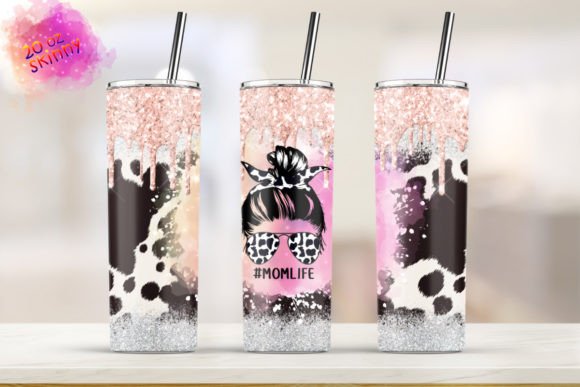
20oz Tumbler Cowhide Sublimation Graphics & Print Templates
The first time I opened the download folder for this cowhide tumbler design, I immediately understood its market potential. The file set arrived as a clean digital download—no physical product, just a sublimation-ready print template built for a 20oz skinny tumbler. The pattern itself is a richly textured, organic cowhide, with natural-looking patches in warm browns and crisp creams. It feels grounded, slightly rustic, and undeniably on-trend for anyone selling personalized drinkware, country-themed accessories, or boho-inspired home goods. As a graphic design asset, it’s not trying to be everything; it’s a focused, well-executed print design that can anchor a variety of creative products if you know how to extend it.
A Rugged, Organic Visual Personality That Commands a Specific Niche
This is not a delicate floral or a minimalist geometric repeat. The 20oz Tumbler Cowhide Sublimation pattern leans into bold, asymmetrical hide markings that feel both premium and handmade. The texture has that soft, leather-like depth that sellers often chase for western, farmhouse, and rustic lifestyle collections. I could see it attracting buyers who love personalized vacuum-insulated tumblers, rodeo-themed gifts, cowgirl party decor, and even trendy camper-style mugs. The mood is earthy, warm, and slightly adventurous—perfect for a boutique Etsy shop or a print-on-demand store aiming for a cohesive brand identity. Because the pattern is busy and organic, it naturally draws the eye, making it a strong candidate for product mockups where you need instant visual impact.
Stretching the Original Print Template Across Sellable Products
While the file is specifically sized for a 20oz skinny tumbler, I always test how a design asset can evolve into a full product line. I imported the high-resolution PNG into my design software and rotated it, recolored sections, and even isolated a few spots to create a matching clipart element. The result was a small cohesive collection: a tumbler wrap, a coordinating digital planner cover, a sublimation-ready mug panel, and a simple greeting card with a cowhide border. The key is to view the 20oz Tumbler Cowhide Sublimation as a base visual language, not a rigid single-use item. As a printable design, it can be repurposed for:
- Sublimation designs for tote bags, throw pillows, and phone cases
- Clipart elements cut from the pattern for scrapbooking or sticker sheets
- Canva templates that use the hide as a background texture for social media graphics
- Cricut projects where the pattern is printed and cut into laptop decals or journal covers
- Digital paper packs that extend the cowhide motif into seamless patterns
However, I would caution against using the full wrap on a tiny product like a single sticker without simplifying the composition. The irregular spots lose their impact when scaled down too aggressively. For sticker designs, I’d extract a smaller, cleaner section of the hide and frame it with a solid border. The same goes for t-shirt graphics: the full wrap shape doesn’t translate well to a chest print, but a cropped, abstract version of the cowhide pattern can become a strong, wearable design.
How This Asset Strengthens Your Product Presentation
When I mock up a new listing, the thumbnail is everything. I placed the 20oz Tumbler Cowhide Sublimation on a realistic tumbler mockup against a warm wooden background, added a simple kraft tag, and watched the image transform. The pattern’s organic contrast makes the product pop even in a crowded creative marketplace search feed. Because the design is bold, it resists becoming a blurry blob at thumbnail size—a common problem with softer patterns. I also tested a bundle listing: a single digital download that included the tumbler wrap, a matching phone wallpaper, and a printable gift tag. The visual consistency told a story of a complete, thoughtful brand, which can increase perceived value and click-through potential.
For social media graphics, I used the cowhide pattern as a textured backdrop behind a bold serif font and a simple product shot. The result felt editorial, elevated, and instantly recognizable. This kind of visual hierarchy is critical for small business branding, especially when you are selling across multiple platforms like Etsy, Creative Fabrica, and Shopify.
Where the Design Shines—and Where You Need to Step Back
After testing the 20oz Tumbler Cowhide Sublimation in several mock scenarios, I found clear strengths and a few sensitive spots.
Best applications:
- Large product previews, especially tumbler mockups where the wrap dominates the scene
- Themed bundles that combine print templates, digital wall art, and matching clip art
- Decorative layouts for printable packaging, hang tags, and thank-you cards
- Merchandise graphics for items like tote bags or aprons where the pattern can be repeated
- Branded social media posts that rely on a strong, nature-inspired background
Use with caution:
- Tiny sticker details: the hide pattern muddles when printed below 1 inch
- Dark backgrounds: the brown tones can blend into charcoal or black surfaces, losing definition
- Text-heavy Canva templates: placing a script font directly over the busy spots can hurt readability
- Cricut or Silhouette cut files: if the design includes a transparent edge for wrapping, ensure the cut line is crisp and the file has a clean, solid border for weeding
- Low-resolution print products: the realistic texture requires at least 300 DPI to maintain the faux-leather feel
Practical Seller Notes Before You Publish
I treat every new digital asset like a product I’m about to list for sale. That means running through a quick but thorough checklist. For the 20oz Tumbler Cowhide Sublimation, here’s what I verified:
- Test on real mockups. The tumbler wrap may need slight resizing to fit popular 20oz slim templates. I tried three different mockup styles to confirm the seam alignment was forgiving.
- Preview as a marketplace thumbnail. I scaled the design down to 200px wide and confirmed the cowhide still read as a distinct pattern, not a muddy blob.
- Check color output. The browns can print darker on some sublimation papers. I printed a test swatch and slightly lightened the warm hues to avoid a muddy result on polyester-coated tumblers.
- Verify PNG transparency. The edge of the wrap should have a transparent background if the file is meant to be placed over a mockup or solid-colored tumbler. I checked for stray pixels near the rim.
- Inspect vector quality if an SVG is included. For customers who want to cut the pattern, I made sure the paths were clean and the hide spots were not overly complex, which can cause cutting machine lag.
- Organize files for the customer. I zipped the folder with a clear naming convention, like “Cowhide_20oz_Wrap_PNG” and “Cowhide_Seamless_Pattern”, so a buyer can instantly understand what’s inside.
- Pair with intentional fonts. I tested a modern serif, a playful handwritten script, and a clean sans serif over the pattern. The serif added a boutique feel, the script felt personal, and the sans serif kept it casual. I’d avoid overly decorative display fonts that compete with the hide’s texture.
- Confirm commercial licensing. This is non-negotiable. I read the license carefully to ensure I could use the 20oz Tumbler Cowhide Sublimation on physical products I sell, in digital bundles, and on print-on-demand platforms. If the license restricts the number of end products, I plan accordingly.
One additional insight: this design asset works beautifully as a cornerstone for a seasonal collection. I created a “Wild West Summer” line that included the tumbler wrap, a matching bandana-patterned digital paper, and a set of cactus illustrations. The cowhide became the unifying texture, and the entire bundle felt curated. That kind of design thinking transforms a single print template into a recognizable brand identity that customers come back to.
For anyone selling in the handmade business space, the 20oz Tumbler Cowhide Sublimation is more than a quick graphic. It’s a strategic starting point for a product line that feels authentic, visually powerful, and remarkably easy to style. Just remember to test, simplify where needed, and always present it with a mockup that tells the full story of the product.