Glitter Leaves 20 Oz Skinny Tumbler Wrap
I’ve been staring at this Glitter Leaves 20 Oz Skinny Tumbler Wrap design for the better part of a morning, not because I’m planning to sublimate a tumbler, but because I’m testing how its visual language translates into embroidery. The file is a high-resolution PNG, sized at 9.3 by 8.2 inches, with a clean rectangular layout originally meant for a 20oz straight tumbler. That’s a generous working canvas, and the description confirms it can be resized for 30oz skinny tumblers too. When you hold that shape in your mind and imagine it stitched onto fabric, you start seeing possibilities that go far beyond drinkware.
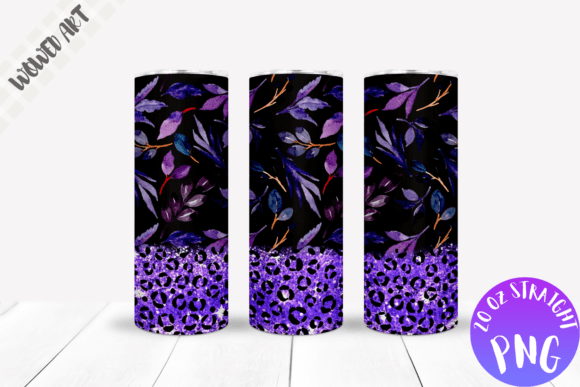
Right away, the mood is grounded but playful. The leafy silhouettes feel organic, and the glitter texture—even in a flat PNG—reads as shimmer, movement, and a touch of celebration. It’s not a bold, in-your-face sparkle. It’s more like a sophisticated dusting of light, the kind of detail that would catch the eye on a handmade market table or in a boutique product photo. The design leans into a nature-inspired elegance that doesn’t feel seasonal in a limiting way. Yes, I immediately thought of autumn craft fairs, but the leaves are abstract enough to cross over into wedding decor, garden-themed gifts, and even everyday luxury accessories.
First Impression of the Design as an Embroidery Asset
I opened the PNG in my digitizing software not to trace it mindlessly, but to see how the shapes breathe. The leaf clusters are well-spaced, with a rhythm that avoids overcrowding. For an embroidery designer, that’s the first checkpoint: does the negative space allow the design to relax, or does it turn into a dense blob? The Glitter Leaves layout passes that test. The edges are soft, with no harsh outlines, which means I can interpret the glitter effect through a mix of satin stitch borders, subtle fill stitch variations, and maybe a few metallic thread accents. The lack of tiny, isolated fragments is a relief—nothing screams “re-digitize me” like a confetti of unconnected dots that will drive you mad on the hoop.
The 9.3×8.2 inch size is generous. For a lot of embroidery projects, I’d scale it down to fit a left chest or a tote bag panel, but I wouldn’t go below 4 inches wide without carefully editing the detail. The glitter texture, if translated into stitch, needs a bit of room to breathe; otherwise it becomes a vague, thread-heavy patch. Even as a graphic asset, the design’s personality is clear: it wants to be a statement piece, not a whisper.
Where This Design Would Feel Right at Home
I started mentally placing the Glitter Leaves 20 Oz Skinny Tumbler Wrap onto real products. The first was a natural cotton tote bag, the kind with a slightly slubby texture that gives dimension to embroidery. A centered placement, roughly 6 inches wide, with the leaves sweeping diagonally—that would turn a blank tote into something that looks intentionally designed for a craft boutique. I’d use a soft moss green, a muted gold, and a tiny bit of copper metallic thread for the glitter veins. No customer would guess it started as a tumbler graphic.
Another strong fit is a sweatshirt. Not a rigid, structured hoodie, but a relaxed, slightly oversized crewneck. The leaves running across the back shoulder area, maybe with one or two drifting onto the front shoulder, would create a wearable, modern look. I’ve seen how well leafy motifs perform in handmade apparel shops, especially when the design feels organic rather than stamped on. The glitter element, even just hinted at through thread sheen, adds that “special occasion” vibe without being loud. For a personalized gift, imagine this on a soft cream baby blanket, with the leaves forming a gentle border around a monogram. The design’s smooth curves are stitch-friendly, and the absence of sharp corners means fewer pivot points and less thread breakage.
Small Shop Merchandise and Etsy-ready Products
If you’re running an Etsy shop or preparing for a craft fair, the Glitter Leaves motif fits right into the handmade aesthetic that buyers crave. Embroidered kitchen towels with this design along the hem would feel elevated, especially with linen or flour sack cotton. Aprons, too—a single leaf cluster on the bib, stitched in a tone-on-tone thread, reads as a subtle logo. Pillow covers with the design repeated in a corner or across the front would sit beautifully in a farmhouse or modern rustic home decor section. The design is versatile enough to be feminine, neutral, or even a little moody depending on thread color choices.
Because the original file is a PNG, I can also use it for digital mockups, product previews, and printable marketing materials. That’s a quiet advantage. I can mock up the exact embroidery placement on a digital sweatshirt template, show it to a client, and get approval before I ever thread the needle. The same file used for the tumbler sublimation can serve as the visual backbone of my embroidery project listing, which keeps the branding cohesive across different product types.
Testing the Design in Real Embroidery Conditions
I always run a mental checklist before I commit a design to stitch. First, I’d test the Glitter Leaves on a scrap of mid-weight cotton with a medium cutaway stabilizer. The glitter texture is the trickiest part. I wouldn’t try to replicate every speckle; instead, I’d use a sparse fill with a subtle metallic thread overlay, or a running stitch pattern that catches the light. Satin stitch borders around the leaf edges would give definition, and the interior could be a lighter fill stitch density to keep the fabric from puckering. The shapes are organic, so a little bit of stitch direction variation actually adds to the natural look.
One thing I’d watch closely is thread color contrast. The design has a bright, airy feel in the PNG, but on dark fabric, the leaves might demand a lighter, more opaque thread palette. On a black sweatshirt, I’d test a light olive, champagne, and a soft silver metallic. On a natural linen, I might go darker—deep forest green, bronze, and gold. The glitter effect doesn’t translate literally, so I’d focus on capturing the illusion of light rather than the literal sparkle.
Fabric and Surface Cautions
There are a few surfaces where I’d hesitate to use this design without major adjustments. Thin, stretchy fabrics like jersey tees would need a heavier stabilizer and possibly a slightly reduced stitch count. The design’s width, if not scaled carefully, could cause tunneling on a lightweight knit. Curved surfaces like caps are another challenge. The rectangular original layout would need to be restructured into a more arched or segmented composition, otherwise the leaves would distort around the cap’s crown. I’d probably pull individual leaf clusters and arrange them manually to fit the cap profile, rather than using the full wrap as-is.
For items that get frequent washing, like kitchen towels or baby onesies, I’d avoid dense metallic thread entirely and instead use a matte polyester thread with a subtle sheen. The design’s beauty holds up even without the literal glitter; it’s the leaf shapes and the rhythm that do the heavy lifting. I’d also test a black-and-white version of the design. If the silhouette and value contrasts still read clearly, I know it’s a strong design. This one passes that test nicely.
Commercial and Branding Considerations
When I think about using the Glitter Leaves 20 Oz Skinny Tumbler Wrap for client work or selling finished products, the licensing is the first thing I check. The listing provides the PNG files in a .zip archive, but as a responsible designer, I’d confirm whether the license allows commercial use on finished embroidery items, or if it’s only for personal use. Most digital product sellers spell this out, but if it’s not clear, I reach out. For my own brand, I’d probably use this design as a recurring motif across a small collection—a tote bag, a matching pouch, and a set of coasters. That kind of visual consistency builds trust and recognition, and this design is distinctive enough to be memorable without being overly complex.
From a production standpoint, the fact that the file is a straight PNG means I have full control over the digitizing process. I can adjust stitch types, density, and underlay to match my specific machine and fabric. That’s an advantage over pre-digitized embroidery files that sometimes come with stitch paths I don’t agree with. The downside is the extra time spent digitizing, but for a design with this much personality, it’s worth the effort.
Practical Notes for Embroidery Designers
If you’re pulling this Glitter Leaves graphic into your embroidery workflow, here’s the approach I’d recommend. First, test the design on a scrap of the actual fabric you’ll use for the final product, with the stabilizer you plan to use. Digitize a small section first—maybe one leaf cluster—and stitch it out to see how the glitter effect reads. Check thread tension and adjust density. Then, confirm your hoop size. The full 9.3-inch width won’t fit a standard 4×4 hoop, so you’ll either need a larger hoop or scale the design down. If you scale down, watch for loss of detail in the leaf veins. Simplify the stitch structure if needed.
I also recommend keeping a detailed stitch journal for a design like this. Note the thread colors, stabilizer type, and any machine settings. When a customer asks for a custom version on a different fabric, you’ll be able to replicate the result with confidence. The Glitter Leaves design is a strong candidate for a best-seller, especially during the fall and holiday season, but it can also be marketed year-round with the right thread palette and product pairing.
Ultimately, this tumbler wrap graphic surprised me. It’s not just a drinkware decoration. With a thoughtful digitizing approach, it becomes a versatile embroidery asset that can elevate a wide range of handmade products. The organic shapes, the hint of sparkle, and the clean layout give it a professional yet approachable feel. For the embroidery designer who’s willing to put in a little testing and creative interpretation, it’s a smart addition to the design library.